



How to Unblock a Drain: DIY Tips + When to Call a Pro
To unblock a drain, start with hot water and washing-up liquid, then a plunger or manual hair removal. If the blockage keeps returning, affects multiple drains, or involves overflowing water, it's time to call a professional plumber rather than risk making the problem worse.
There's a special kind of dread that comes with watching your kitchen sink drain slower and slower. Maybe you've already poured half a bottle of something aggressively labelled "POWERFUL DISSOLVE ACTION" down there. Maybe it helped for two days, then stopped. Sound familiar?
Blocked drains are one of the most common plumbing issues we deal with at RCB Plumbing — and the good news is that many of them can be fixed without picking up the phone. This guide walks you through the DIY drain unblocking methods that actually work, what to avoid, and the clear signs that it's time to call in a professional. We cover Sutton, South London and Surrey, so if you do need us, we're not far away.
What causes blocked drains in the first place?

Knowing what you're dealing with makes it a lot easier to fix.
In the kitchen, the usual suspects are fats, oils and grease that solidify in the pipe, along with food debris and coffee grounds. These build up gradually until water has nowhere to go.
In the bathroom, it's mostly hair, soap scum and — despite what the packaging says — "flushable" wipes. They're not flushable. They never were.
Outdoors, blocked gullies are often caused by leaves, silt and debris, while older properties can sometimes have root ingress or partial pipe collapse.
How do you know you've got a blockage? Watch out for: slow draining water, a gurgling plughole, bad smells from drain openings, or water backing up into the sink, bath or shower.
Before you start: quick safety checks
A few things worth doing before you reach for the tools:
Don't mix chemical products. Combining drain cleaners can produce toxic fumes. Use one thing at a time, and rinse thoroughly between attempts.
If water is overflowing, protect your flooring and turn off the water supply to the affected fixture.
Multiple drains blocked at once? If more than one fixture is draining slowly (or not at all), this points to a main drain issue rather than a localised blockage. That's a job for a professional — don't try to rod or plunge your way through a main line problem.
Repeat blockages are a warning sign. If you've cleared the same drain three times in a month, something else is going on.
DIY drain unblocking: what to try first

Boiling water
The simplest starting point for a kitchen sink blockage. Boil the kettle, pour it slowly down the drain in two or three stages, giving it a moment to work between each pour. It's effective on light grease and soap build-up.
One word of caution: if you have plastic (PVC) pipework, use hot rather than boiling water to avoid softening the joints over time.
Washing-up liquid and hot water
A step up from hot water alone. Squirt a good amount of washing-up liquid down the drain, follow it with a kettleful of hot water, and let it sit for ten minutes before flushing through. The detergent helps break down grease and shift minor blockages in kitchen pipes.
Plunger
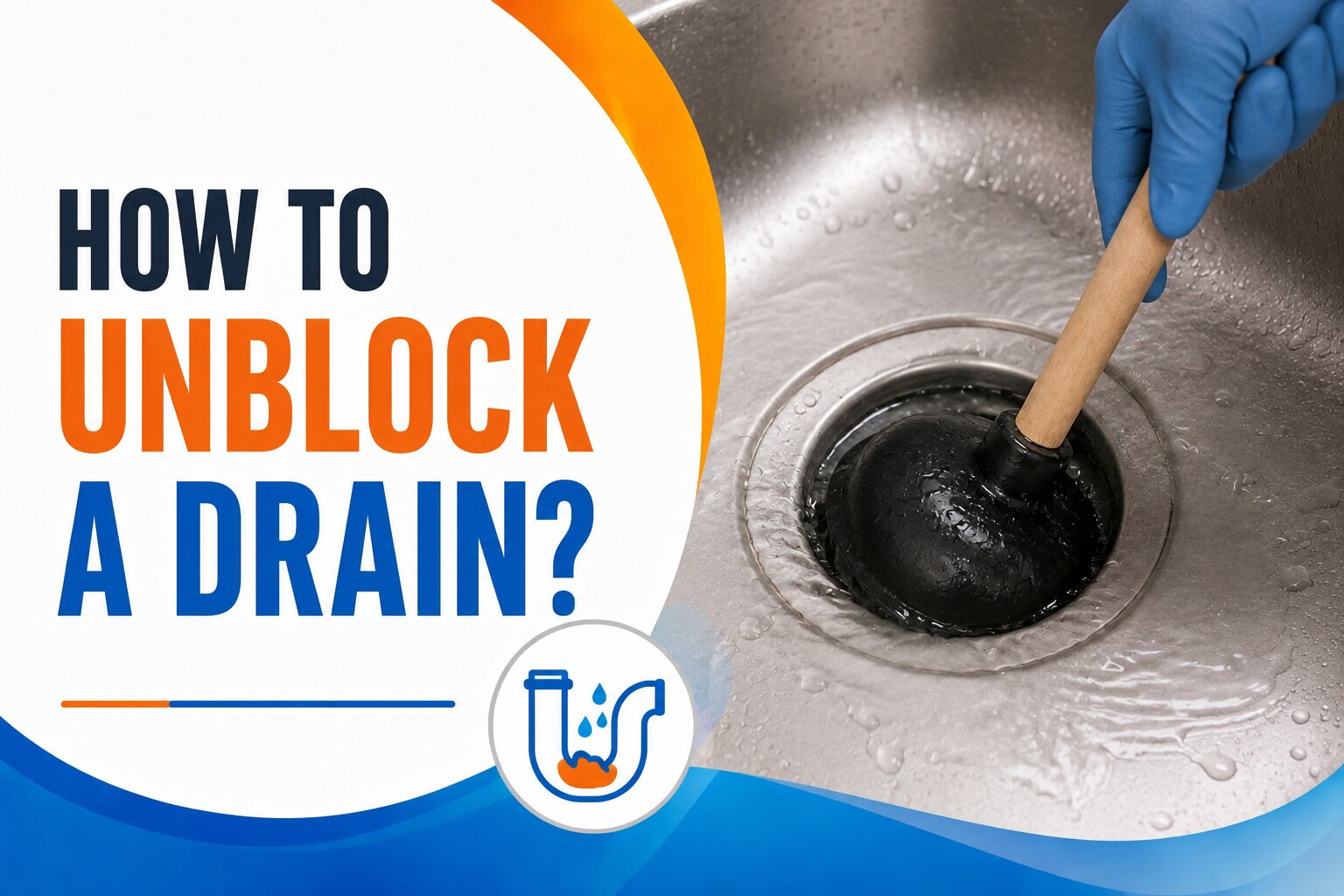
Underrated and genuinely effective. Fill the sink with enough water to cover the rubber cup, place the plunger firmly over the plughole, and pump it up and down in steady, even strokes. The suction helps dislodge the blockage rather than just pushing it further down.
For a good seal on a double sink, block the other drain with a damp cloth first. Plungers work well on sinks, baths and showers — and yes, also toilets, though you'll want a flange plunger for those.
Remove and clean the trap (the U-bend under the sink)
Many kitchen sink blockages sit right in the U-bend. Put a bucket underneath, unscrew the trap by hand (or with a wrench if it's stuck), empty the contents, give it a rinse, and refit. It's not glamorous work, but it solves the problem more often than not.
Stop if the fittings are corroded, if anything cracks, or if you spot signs of a leak around the joints. Those are signs the pipework needs attention, not just a clean.
Unblocking a shower or bath drain
This is almost always hair. Use a drain snake or a simple plastic hair hook (cheap and widely available) to pull out whatever's lurking down there. Clean the plug cover too — soap scum builds up fast. It's a grim job, but over in two minutes.
Bicarbonate of soda and vinegar
The fizzing reaction looks impressive. In reality, it's best suited to minor build-up and odour control rather than serious blockages. Pour half a cup of bicarb down the drain, follow with half a cup of white vinegar, let it fizz for 15–20 minutes, then flush with hot water. It won't shift a solid clog, but it can help keep drains fresher as a maintenance habit.
Drain rods (outdoor drains only)
If you have a blocked outdoor gully, drain rods can help. Feed them in gently, turning clockwise as you go. Use a steady, patient technique — don't force them, and don't turn anticlockwise or the sections can unscrew inside the pipe. If it's not shifting relatively easily, stop. Forcing it can damage older pipework.
What not to do

Overusing caustic chemical cleaners. They can damage pipe seals and certain materials, and may actually harden some types of blockage. Use them sparingly, if at all.
Mixing products. Seriously — don't.
Forcing rods or snakes past resistance. If something's not moving, there's a reason.
Ignoring repeat blockages. They don't fix themselves.
DIY on suspected collapsed pipes or root ingress. These need professional diagnosis and repair — no amount of plunging will sort them.
Blocked drains: signs you need a professional

If any of the following apply, it's time to call someone:
You've tried the DIY methods and nothing's shifted
The blockage keeps coming back within days or weeks
Multiple drains or toilets are affected at the same time
There's a persistent bad smell across different parts of the house
Water is overflowing outside or backing up indoors
You suspect root ingress or a collapsed section of pipe
You simply can't access the blockage safely
What we'll do differently: At RCB Plumbing, we start with a proper diagnosis — identifying exactly where the blockage is and what's causing it, rather than guessing. For stubborn blockages, we use high-pressure jetting to clear the pipe thoroughly. Where needed, we carry out a CCTV inspection to check for damage. If repairs are required, we'll explain exactly what's needed and why before we start.
We offer clear, upfront pricing — no nasty surprises on the bill. We aim to respond quickly and offer same-day appointments where possible, with 24/7 contact available for urgent situations. We're local to Sutton and cover the surrounding areas across Surrey and South London.
How to prevent blocked drains
A few habits that genuinely make a difference:
Pour cooled cooking fat into a container and bin it — never down the sink
Fit a sink strainer and a hair catcher over your shower or bath drain
Avoid flushing wipes, cotton pads or anything other than toilet paper
Run hot water down your kitchen drain for a minute or two after washing up
After clearing a blockage, clean the trap, run the water for a few minutes, and keep an eye on it
Frequently asked questions
What's the quickest way to unblock a drain at home?
For most kitchen blockages, start with hot water and washing-up liquid. If that doesn't work, a plunger is your next best option. For a shower drain, it's usually hair — a cheap plastic drain hook will sort it in a few minutes. The quickest fix depends on the cause, which is why it helps to know what type of blockage you're dealing with.
Does bicarbonate of soda and vinegar actually unblock drains?
It can help with mild build-up and bad smells, but it won't clear a solid blockage. Think of it as a maintenance tool rather than an emergency fix.
Is it safe to use chemical drain cleaners?
Use them with caution. Caustic cleaners can damage older pipes and seals, produce harmful fumes, and in some cases harden certain types of blockage. If you do use one, follow the instructions exactly, never mix it with anything else, and don't use them regularly.
Why does my drain keep blocking even after I've cleared it?
Recurring blockages usually mean there's an underlying problem — a partial collapse, root ingress, a poorly graded pipe, or a build-up point that simple DIY can't fully clear. If you've unblocked the same drain more than twice, it's worth getting a professional to take a proper look.
How do I know if the blockage is in the main drain?
If only one fixture is slow, the blockage is most likely local to that drain. If multiple sinks, baths or toilets are affected, or if you hear gurgling from drains you're not using, that points to a shared or main drain issue — which needs professional attention.
Do you offer drain unblocking in Surrey and South London?
Yes — drain unblocking is one of the services we carry out regularly across Sutton, Carshalton, Epsom and the wider Surrey and South London area. If you're dealing with a persistent or serious blockage, get in touch and we'll sort it out properly.
Need help with blocked drains in Surrey or South London?
No judgement — we've seen it all, from kitchen grease build-ups that would make your eyes water to outdoor gullies that haven't been touched in a decade. Blocked drains are a normal part of homeownership. What matters is knowing when to tackle it yourself and when to pick up the phone.
If you've worked through the DIY steps and nothing's shifted — or if you'd rather not risk making things worse — we're here to help. RCB Plumbing offers fast response times, same-day appointments where possible, 24/7 availability for urgent issues, and clear pricing before any work begins.
Call us or request a callback via our contact page and we'll get it sorted.


